Act Slow Fast
Published on September 3, 2026. · 14 min read
There’s a strange contradiction in how we’re expected to live today. Everything is moving faster. Technology changes faster, information travels faster, new ideas appear faster, and entire industries can shift in a matter of months. And somehow, we’ve concluded that we need to move at the same speed.
I don’t think we do.
In fact, I think one of the most important skills today is learning to act fast and absorb slowly.
These sound contradictory, but they are not. When something changes, you should be able to respond quickly. Try the new tool. Read the paper. Build the prototype. Make the decision when it needs to be made.
Acting is cheap for you right now. Try the new model. Rewrite the service. Spin up the prototype on a Saturday because you were curious. Do that fast. Fast is correct there. It has never in the history of building things been cheaper to try something, and if you’re slow at the trying part, you’re just being slow.
Absorbing is the other one. That’s when the trying turns into understanding. When you work out what the new thing actually changes about how you build, what it makes pointless, what it quietly breaks, what it’s genuinely bad at that nobody’s admitting yet. That has a floor. It takes what it takes. You can’t compress it by wanting to, and every time you try, what you get is a person who knows a hundred tool names and has no working model of anything.
Take the opportunity when it is in front of you. But you don’t have to immediately let that change your entire worldview.
You don’t have to decide that this is the future. You don’t have to abandon everything you were doing yesterday because someone announced something new today. You can act quickly without forming conclusions quickly.
That distinction becomes increasingly important when everything around us is optimized for urgency.
We are surrounded by things that feel urgent
Every day there is something new to react to. A new model. A new startup. A new framework. A new programming language. A new paper. A new product. A new market. Someone has figured something out that everyone else apparently missed.
And because we can see all of this in real time, it creates a peculiar kind of pressure. Suddenly it turns out you have been using a damn neck pillow wrong your entire life. You start wondering if you are falling behind. Maybe you should be learning this. Maybe you should be building that. Maybe everyone else has already moved on. Maybe the thing you spent the last two years working on is no longer relevant. The internet makes it very easy to confuse visibility with importance.
Just because something is everywhere today does not mean it will matter five years from now. And just because something does not have your attention today does not mean it won’t matter five years from now. We have become very good at reacting. I am not sure we have become better at absorbing.
Technology has always taken longer than it feels
Look at electricity.
Today it is almost impossible to imagine the world without it. It feels like one of those technologies that simply arrived and transformed everything. But it didn’t happen that way.
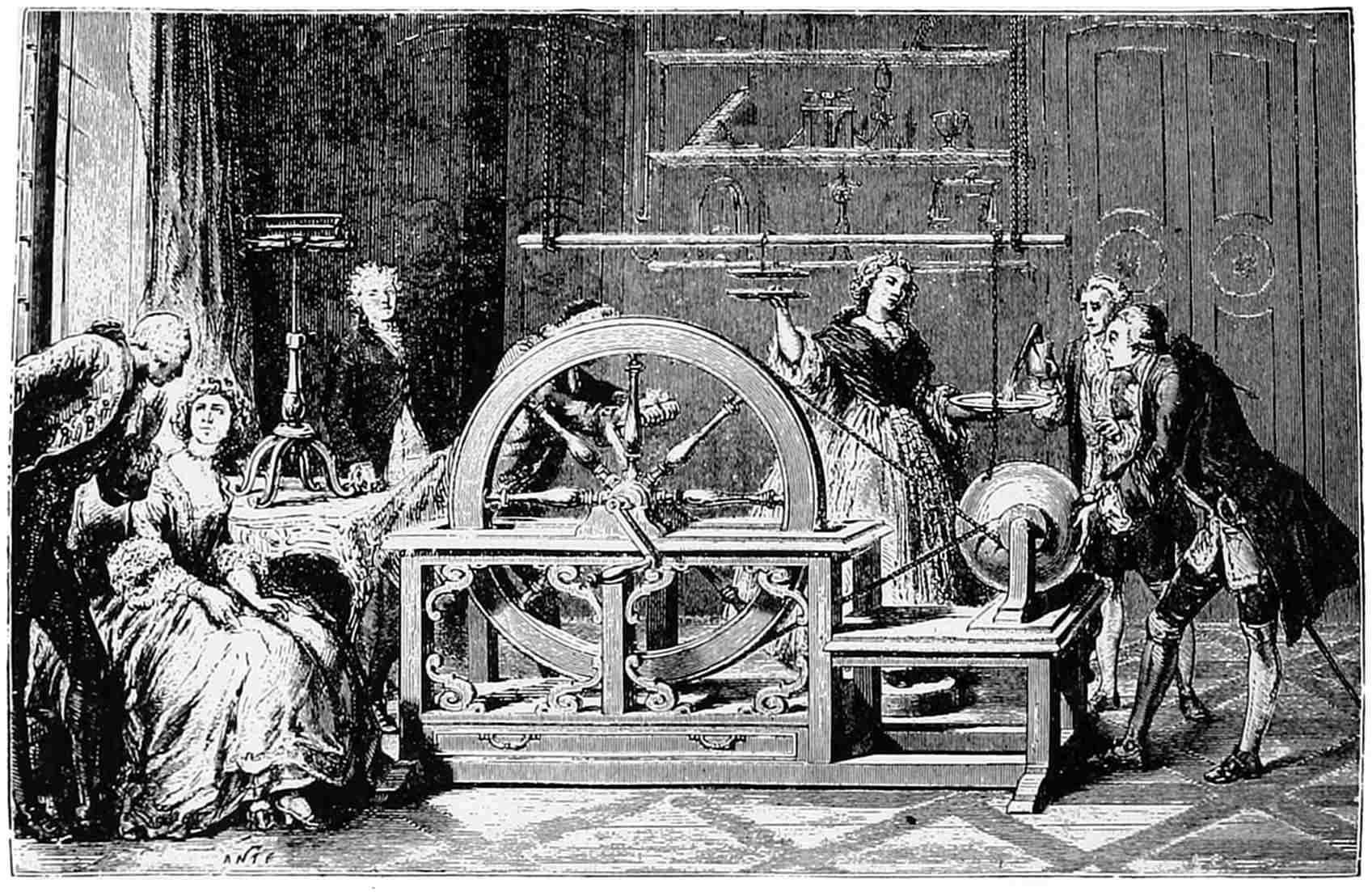
Practical electrical systems developed over decades. Edison opened the Pearl Street Station in New York in 1882. Alternating current systems developed alongside competing approaches. Power generation, transmission, distribution, motors, lighting and appliances all had to evolve. Now guess how long it took American factories to actually get more productive because of it.
About forty years.
And not because the tech wasn’t ready. Because the first thing everybody did was the obvious thing. Factories back then were built around one enormous steam engine turning one enormous shaft down the middle of the building, with belts hanging off it to drive every machine on the floor. The entire layout of the building existed to serve that shaft.
So electricity shows up, and the sensible move is to pull out the steam engine and drop a big electric motor in its place.
Which changed nothing. Same shaft, same belts, same building. You’ve swapped the power source and kept an architecture designed around the power source you just removed.
The real gain came years later, when someone worked out you could put a small motor on each machine instead. No shaft. No belts. Which meant machines didn’t have to sit in a line to reach the spine anymore. Which meant you could arrange the floor around the work instead of around the power. Which got you single storey buildings, natural light, materials moving in a straight line, and eventually the assembly line itself.
That isn’t an engineering insight. It’s an absorption insight. It needed a generation of people living inside the new thing before anyone could see it. The technology was fast. The understanding was slow. There was no timeline where somebody read the right paper in 1883 and skipped to the end.
…and it happened again.
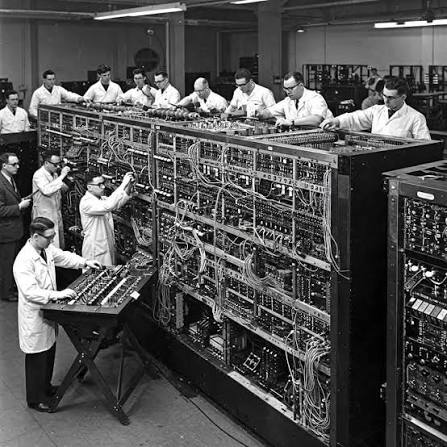
In 1987 an economist named Robert Solow made a remark that stuck around, roughly that computers were visible everywhere except in the productivity statistics.
He was right. Companies had poured money into computers all through the seventies and eighties and you could barely find the returns. The gains turned up in the mid nineties, once the organisations around the machines had been rebuilt to match what the machines were actually good for.
The transistor appeared in the 1940s. Integrated circuits came later. Microprocessors came later still. Personal computers became widespread decades after the first electronic computers. Then came networks, the web, smartphones and cloud computing. Each step felt revolutionary to the people living through it. But when you look backwards, it looks almost like one continuous story.
That’s the interesting part.
The people building the future had to move quickly. The future itself took decades to arrive.
We tend to forget this because history compresses time. When you read about the invention of the transistor, it is a paragraph. When you read about the birth of the personal computer, it is a page. When you read about the internet, it is a chapter.
But someone lived through every one of those years.
They had to decide what mattered and what didn’t. They had to deal with technologies that were immature. They had to make bets without knowing which ones would work. They had to operate without hindsight. And perhaps most importantly, they had to live their lives while the future was still uncertain.
You don’t have to understand something immediately
One of the most liberating things you can accept is that you don’t have to know what something means immediately. Something new can simply be interesting. You can explore it without committing to it. You can use it without worshipping it. You can be excited about it without making it your entire identity. You can say, “I don’t know yet.” That is an increasingly valuable answer, especially when everyone else seems to have an opinion five minutes after something happens.
There is a difference between being late and taking your time.
Being late means you missed something you should have acted on. Taking your time means you deliberately chose to understand before committing. The challenge is knowing which one you’re doing. This is where acting fast becomes useful. If something interesting appears, go look. Don’t spend six months debating whether you should try it. Try it. Build something. Play with it. Understand it from the inside. But then step back. Ask what actually changed. Ask what didn’t. Ask whether the thing is a genuine shift or simply a very loud moment. You can move quickly at the edges while remaining slow at the center.
Move fast at the edges
I think this is one of the best ways to approach a rapidly changing world.
Keep your core relatively stable. Let the edges move quickly.
Your curiosity should be fast. Your experiments should be fast. Your prototypes should be fast. Your willingness to learn should be fast. But your deepest beliefs, commitments and direction can move much more slowly. This is particularly important when you are building something for a long period of time. If you constantly change direction every time the environment changes, you eventually spend most of your energy changing direction. You stop building. You stop accumulating. You keep starting over. There is a cost to being perpetually responsive. And nobody talks enough about that cost.
The two brothers who got this right
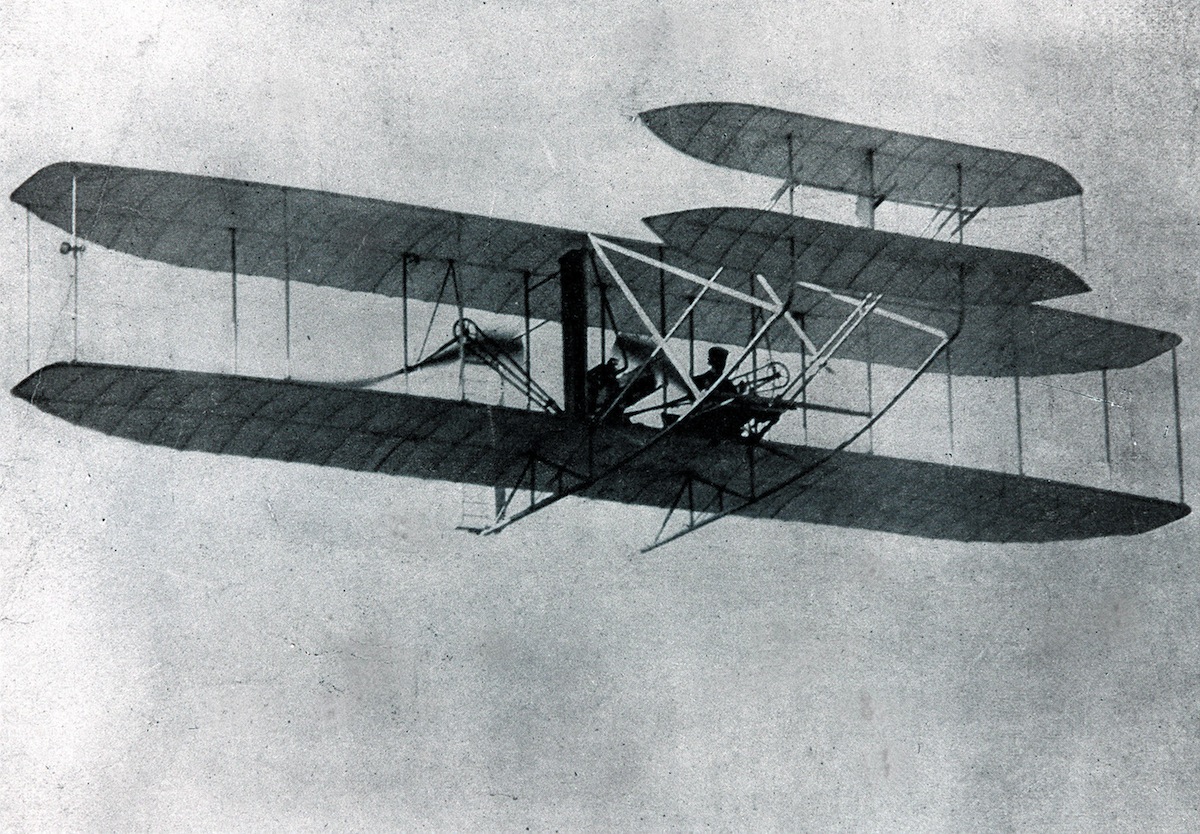
If you want a model for how this looks in a person and not a century, take the Wright brothers.
They were not slow. They were relentless. Between 1900 and 1902 they went back to Kitty Hawk again and again and flew gliders. Hundreds of flights. They crashed constantly. When their numbers stopped matching what they were seeing, they built a little wind tunnel in Dayton and tested something like two hundred wing shapes themselves, because the published data everyone had been trusting turned out to be wrong.
That’s fast. Aggressively fast. Cheap experiment, cheap experiment, cheap experiment.
But look at what all that motion was for. It was slow work. They were building an understanding of control. Everyone else was chasing power and lift, trying to bolt a bigger engine onto a bigger wing. The Wrights decided the actual problem was staying balanced in three axes, and they spent years on that one question while looking, from the outside, like two guys who kept falling out of the sky.
Meanwhile Samuel Langley had government money, a reputation, and a schedule. He launched his machine off a houseboat on the Potomac in front of the press. Twice, in 1903. It went into the river both times.
Nine days after Langley’s second crash, the brothers flew.
FOMO is exhausting
A lot of modern ambition is driven by fear. Fear of missing the next thing. Fear of being left behind. Fear that someone else is moving faster. Fear that the opportunity will disappear if you don’t act right now. Sometimes that fear is useful. Most of the time, it is just exhausting.
Fear takes your absorption time and converts it into more action time. You feel behind, so you skip the sitting and thinking part and go straight to the next thing, because the next thing feels like progress and thinking feels like doing nothing. Keep that up long enough and you end up with enormous surface area and no depth anywhere. You’ve touched everything and digested none of it.
There will always be another thing. There will always be another opportunity. There will always be someone moving faster than you.
If your pace is determined by everyone else’s pace, you have effectively given up control of your life. You are no longer deciding how fast you want to go. You are reacting. And reacting faster does not necessarily mean progressing faster.
The market doesn’t reward that, btw. Look at what came out of the dot com crash alive. Amazon lost nearly all of its market value in 2000 and 2001 and just kept building the boring parts, the warehouses, the logistics, the infrastructure nobody wanted to fund. The ones that burned were mostly the ones sprinting hardest at the loudest signal.
Sometimes the fastest way forward is to stop.
Take a break. Look at the board. Ask yourself what game you are actually playing.
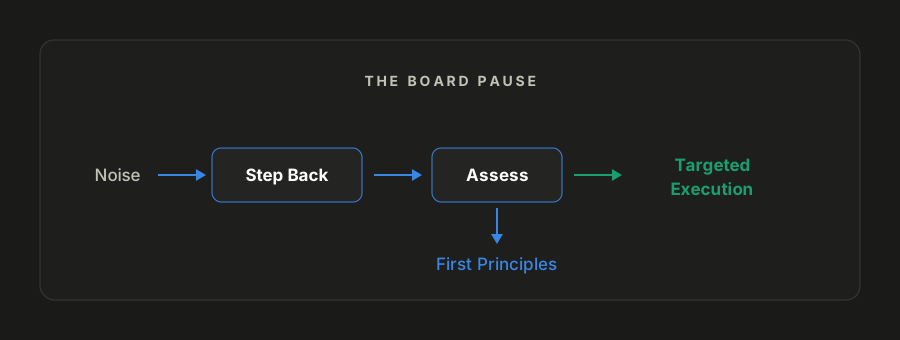
Take a break from the board
Think about how a decent chess player uses a clock.
They blitz the opening, because the opening is memorised. Then they hit the point where the position gets unfamiliar and they stop dead and burn twenty minutes on a single move. The time isn’t spent evenly. But, it is spent wisely.
You’re probably doing the opposite. Same tempo through everything, which makes you too slow on the parts you already know and far too fast on the parts that decide the game.
So stop. Often. Not as a reward for finishing something, and not as recovery once you’re already wrecked, which is when most of us finally take a break. Stop as a move.
Then actually look. What changed in the last three months. What were you assuming that isn’t true anymore. What are you doing purely because you were already doing it. What’s loud and what’s real.
That pause isn’t a hole in your work. It’s the part where the last six months turns into something you can use.
Sometimes you need to stop reading. Stop building. Stop reacting. Stop checking what everyone else is doing. Go for a walk. Read something completely unrelated. Sleep on the decision. Come back next week. The world will probably still be there. And sometimes, after stepping away, you realize that the thing you thought was incredibly important wasn’t important at all.
That is not wasted time. That is perspective.
The goal is not to be slow
I don’t think the answer to all of this is to slow down. That would miss the point.
There are moments when you should move incredibly fast.
When an opportunity is real, act. When something needs to be shipped, ship it. When you see something worth exploring, explore it. When the window is open, walk through it. Speed is a powerful advantage. But speed should be something you use, not something you live inside. There is a difference.
The goal is not to become slow. The goal is to choose your speed. Sometimes you sprint. Sometimes you walk. Sometimes you sit down and figure out where you are going. And you should be comfortable with all three.
Optimize for longevity
I think we have become obsessed with maximizing velocity.
How much can I do today? How quickly can I ship? How quickly can I learn? How quickly can I get ahead?
But there is another metric that matters.
How long can I keep going?
If you are building something that matters to you, the game is probably not one year long. It might be ten years. Maybe twenty. Maybe your entire career. In that game, burning yourself out every time the world gets noisy is not a sustainable strategy. You need periods of intensity. You also need periods of recovery. You need periods of exploration. You need periods of deep focus. You need periods where you don’t do much at all.
Not every moment needs to produce something.
Some of the best ideas arrive after you stop trying to produce them. And some of the best decisions become obvious only after you give yourself enough distance from the problem.
Set your own clock
Nobody’s going to hand you permission for this. The whole environment is built to set your pace for you, and the pace it picks is always somebody else’s.
There is a strange freedom in realizing that you don’t have to keep up. You can move quickly when you want to. You can move slowly when you need to. You can spend a week understanding something that everyone else decided they understood in a day. You can ignore something for six months and come back to it later. You can change your mind. You can decide that something is important without deciding that it is urgent. You can be early to an idea without being in a hurry.
Most importantly, you can build a life that is sustainable enough for you to stay in the game. Because the people who last have an advantage that is easy to underestimate. They get to keep playing. They get to see what happens next. They get to experience the second-order effects that everyone who rushed past the first wave never noticed. They get to change their minds with more information. They get to compound.
So yes, act fast.
Be curious. Experiment. Build. Move when it is time to move.
But absorb slowly.
Let ideas sit with you. Let the noise pass. Take your time deciding what deserves to change your mind.
And every once in a while, step away from the board.
You don’t have to match the world’s pace.
You only need to find yours.