Synthetic Asset Tokens
Imagine having access to the value of an asset, say, Tesla stock, without ever owning it. That's essentially what synthetic asset tokens (or just "synthetics") do.
Created on December 20, 2024. · 10 min read
Table of Contents
Imagine having access to the value of an asset, say, Tesla stock, without ever owning it. That’s essentially what synthetic asset tokens (or just “synthetics”) do. These are blockchain-based tokens that mimic the value of real-world assets, such as stocks, commodities, or even fiat currencies. Think of them as financial doppelgängers: they look, act, and feel like the original, but they exist entirely in the digital realm.
In the traditional financial market, synthetic assets are not new. Derivatives like futures and options have been around for decades, allowing traders to bet on the price of an asset without ever owning it. Synthetic tokens simply bring this concept to the blockchain, leveraging smart contracts to handle everything transparently and automatically.
Derivatives exist in web3 as well already. However, there’s still lot of scepticism around it. Derivatives like futures, options, and perpetual swaps already exist and are widely used. Both derivatives and synthetic tokens are tied to an underlying asset, such as Bitcoin, Ethereum, or traditional stocks like Tesla. The performance of these assets directly affects the value of the derivative or synthetic token. Just as derivatives allow traders to speculate or hedge risks, synthetic asset tokens let users gain exposure to the price of assets without actually owning them.
Crypto derivatives have gained significant traction, especially in speculative trading. Futures and perpetual swaps on exchanges like Binance, Bybit, and dYdX dominate trading volumes. They offer high liquidity and enable speculation on crypto prices. Traders and institutions use derivatives to manage risk, especially in highly volatile markets. Many jurisdictions have banned or restricted derivatives trading due to concerns over high leverage and investor risk (e.g., Binance halting derivatives in several countries). The extreme price swings in crypto make derivatives riskier than their traditional counterparts, leading to liquidations for unprepared traders.

Traditional finance views synthetics as tools for hedging and speculation. Want to protect yourself from the wild price swings of oil without owning physical barrels? A synthetic derivative could be your best friend. Similarly, traders use them to speculate on price movements, essentially making money out of thin air, if they play their cards right.
In the tokenized asset market, synthetic tokens serve a similar purpose, but with a blockchain twist. They’re used for:
-
Global Accessibility: You don’t need a brokerage account to own a synthetic version of Apple stock. Just a crypto wallet will do.
-
Fractional Ownership: Want exposure to gold but can’t afford a whole ounce? Synthetic tokens can be fractioned down to tiny denominations.
-
Decentralized Finance (DeFi): Platforms like Synthetix allow users to mint synthetic tokens using their crypto as collateral.
Like any financial innovation, synthetic asset tokens come with their own set of advantages and challenges.
Pros
-
Accessibility: Traditional markets often have barriers, like location, regulations, or account requirements. Synthetic tokens tear those walls down.
-
Efficiency: Transactions happen on the blockchain, which means they’re often faster and cheaper than traditional methods.
-
Liquidity Boost: Synthetic tokens can unlock liquidity by bringing otherwise illiquid assets into a tradable, digital format.
Cons
-
Complexity: They’re not beginner-friendly. Understanding how synthetics work requires some financial and blockchain literacy.
-
Regulation: Governments haven’t fully figured out how to regulate synthetic tokens, which could lead to legal uncertainties. Hell, some governements are yet to figure to crypto itself.
-
Counterparty Risk: In DeFi, your synthetics depend on smart contracts and oracles. If something goes wrong there, your assets could be at risk.
Here’s where things get exciting. Synthetic asset tokens can significantly improve liquidity in the crypto and NFT markets by unlocking idle assets, diversification and bridging markets. Imagine converting an NFT, typically illiquid, into a synthetic token that can be freely traded. This opens up an entirely new avenue for liquidity in the NFT space. Traders could gain exposure to other markets (stocks, gold, real estate) without leaving the crypto ecosystem. Synthetic tokens could serve as a bridge between traditional and crypto markets. For example, a synthetic token pegged to the S&P 500 index could attract traditional investors into the blockchain world.
In essence, synthetics have the potential to make markets more fluid, more inclusive, and more interconnected.
A few platforms and projects are already leveraging synthetic asset tokens:
-
Synthetix: Synthetix is one of the leading platforms for synthetic assets. It allows users to mint Synths tokens representing real-world assets like sUSD (synthetic USD), sBTC (synthetic Bitcoin), and even synthetic stocks. Synthetix uses Chainlink oracles to ensure accurate pricing.
-
Mirror Protocol: Built on Terra, Mirror Protocol enabled synthetic versions of stocks like mAAPL (synthetic Apple stock) and mGOOGL (synthetic Google stock). It gained popularity for allowing users outside the U.S. to trade synthetic U.S. stocks. However, Terra’s collapse affected its adoption.
-
NFTy (👀): Imagine a platform where synthetic tokens represent a basket of the top 500 NFT collections. It creates a new layer of liquidity and market exposure for NFT enthusiasts.
Let’s skip to look into code for a bit.
// SPDX-License-Identifier: MIT
pragma solidity ^0.8.0;

contract SyntheticAssetToken {
    string public name = "SyntheticAssetToken";
    string public symbol = "SAT";
    uint8 public decimals = 18;
    uint256 public totalSupply;

    mapping(address => uint256) public balanceOf;
    mapping(address => mapping(address => uint256)) public allowance;

    uint256 public collateralRatio = 200; // 200% collateral required
    uint256 public collateralLocked;

    mapping(address => uint256) public collateral;

    address public owner;

    constructor() {
        owner = msg.sender;
    }

    modifier onlyOwner() {
        require(msg.sender == owner, "Only the owner can perform this action");
        _;
    }

    // Events
    event Transfer(address indexed from, address indexed to, uint256 value);
    event Approval(address indexed owner, address indexed spender, uint256 value);
    event Mint(address indexed user, uint256 amount, uint256 collateral);
    event Burn(address indexed user, uint256 amount, uint256 collateralReturned);

    // Transfer tokens
    function transfer(address to, uint256 value) public returns (bool) {
        require(balanceOf[msg.sender] >= value, "Insufficient balance");
        balanceOf[msg.sender] -= value;
        balanceOf[to] += value;
        emit Transfer(msg.sender, to, value);
        return true;
    }

    // Approve an allowance for another address
    function approve(address spender, uint256 value) public returns (bool) {
        allowance[msg.sender][spender] = value;
        emit Approval(msg.sender, spender, value);
        return true;
    }

    // Transfer tokens on behalf of another address
    function transferFrom(address from, address to, uint256 value) public returns (bool) {
        require(balanceOf[from] >= value, "Insufficient balance");
        require(allowance[from][msg.sender] >= value, "Allowance exceeded");
        balanceOf[from] -= value;
        balanceOf[to] += value;
        allowance[from][msg.sender] -= value;
        emit Transfer(from, to, value);
        return true;
    }

    // Mint synthetic tokens by locking ETH as collateral
    function mint(uint256 amount) public payable {
        uint256 requiredCollateral = (amount * collateralRatio) / 100;
        require(msg.value >= requiredCollateral, "Insufficient collateral");

        collateral[msg.sender] += msg.value;
        balanceOf[msg.sender] += amount;
        totalSupply += amount;
        collateralLocked += msg.value;

        emit Mint(msg.sender, amount, msg.value);
    }

    // Burn synthetic tokens and withdraw collateral
    function burn(uint256 amount) public {
        require(balanceOf[msg.sender] >= amount, "Insufficient token balance");

        uint256 collateralToReturn = (amount * collateralRatio) / 100;
        require(collateral[msg.sender] >= collateralToReturn, "Insufficient collateral locked");

        balanceOf[msg.sender] -= amount;
        totalSupply -= amount;
        collateral[msg.sender] -= collateralToReturn;
        collateralLocked -= collateralToReturn;

        payable(msg.sender).transfer(collateralToReturn);

        emit Burn(msg.sender, amount, collateralToReturn);
    }

    // Fallback function to handle ETH sent directly to the contract
    fallback() external payable {}

    receive() external payable {}
}
Users lock ETH as collateral, and the contract mints synthetic tokens (SAT) for them. The required collateral is 200% of the token’s value (adjustable by modifying collateralRatio). Users can burn their synthetic tokens to reclaim the collateral they locked. The contract also supports ERC-20 functions like transfer, approve, and transferFrom.
Please note that this smart contract is for understanding need only and not to be used in real production use-case. It needs to have further price oracles, liquidation and governance models included for that, not to mention security.
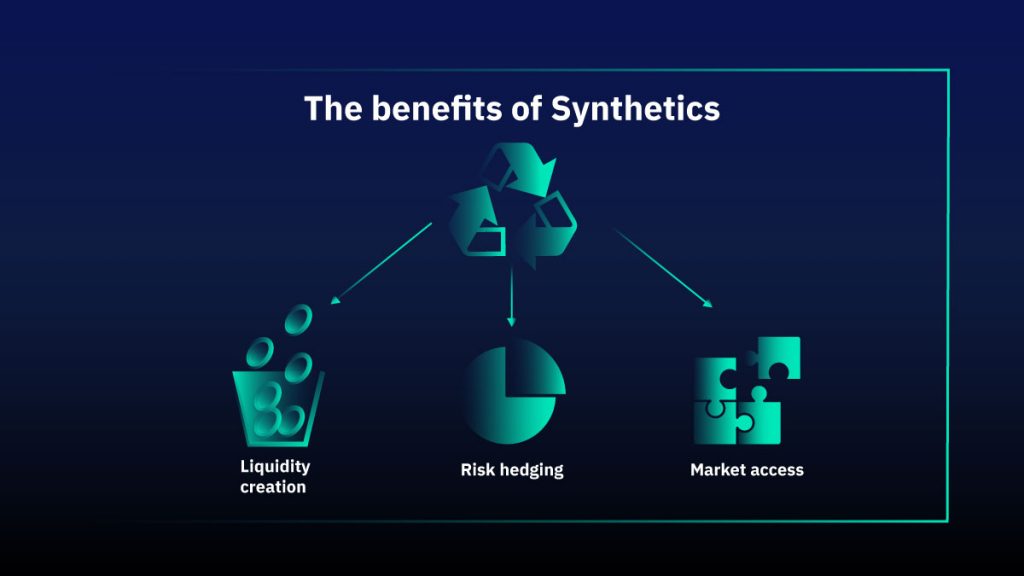
As exciting as synthetic asset tokens are, they come with significant security concerns. Since these tokens are entirely reliant on blockchain technology and smart contracts, their safety depends on the robustness of the underlying code and ecosystem.
Smart Contract Vulnerabilities
Smart contracts are immutable once deployed, meaning any bug in the code can be catastrophic. Hackers can exploit vulnerabilities to drain collateral, mint unauthorized tokens, or manipulate token behavior.
- Example: The 2020 bZx protocol exploit resulted in losses of millions due to flaws in its smart contract logic.
Price Oracle Manipulation
Synthetic tokens rely on price oracles to mirror the value of real-world assets. If an oracle is compromised or manipulated, the synthetic token’s value could diverge drastically, leading to losses for users.
- Example: In 2022, several DeFi platforms experienced oracle attacks where attackers manipulated prices to profit from undercollateralized positions.
Collateral Risks
Synthetic tokens require collateral backing to maintain trust and stability. If collateral values drop suddenly (e.g., during a market crash), the synthetic asset system could become undercollateralized, leading to insolvency and loss of funds.
Rug Pulls and Governance Exploits
In decentralized systems, malicious actors could take over governance (via token voting) and implement changes that siphon funds or destroy the ecosystem.
Regulatory Compliance Risks
Since synthetic tokens mimic traditional assets, they often blur the line between DeFi and traditional finance. Regulatory bodies like the SEC in the U.S. or the RBI in India could impose restrictions or fines on platforms operating without compliance.
Governance is essential to ensure the stability, transparency, and adaptability of synthetic asset platforms. Without proper governance, these systems can devolve into chaos, whether through technical issues, regulatory non-compliance, or community mismanagement.
-
Updating Parameters: Adjusting collateral ratios, fees, and system rules in response to market conditions.
-
Security Audits: Funding regular audits to identify and patch vulnerabilities.
-
Price Oracle Management: Ensuring that oracles used for price feeds are reliable, decentralized, and tamper-proof.
-
Emergency Response: Providing mechanisms to pause or roll back operations during unexpected attacks or exploits.
-
Regulatory Compliance: Proactively adapting to legal requirements, such as Know Your Customer (KYC) and Anti-Money Laundering (AML) measures.
We can infact learn a lot from traditional financial governance as they’ve gone through similar states involving synthetic assets or derivatives.
-
SEC’s Role: In traditional finance, the U.S. SEC (Securities and Exchange Commission) enforces regulations that protect investors, ensure market fairness, and penalize fraud. Synthetic token platforms could learn from the SEC’s stringent oversight of derivatives and securities markets to build trust.
-
RBI’s Approach: The Reserve Bank of India oversees monetary policy and ensures that banks maintain sufficient reserves. Similarly, synthetic token platforms need to enforce collateralization rules to prevent insolvency.
Many synthetic token projects already implement decentralized governance models, where token holders vote on key decisions. However, these systems need to balance decentralization with expertise; relying solely on token holders without checks can lead to uninformed or malicious decisions.
In decentralized synthetic asset markets, reputation will be a key differentiator. Fund managers with strong track records will likely attract more users, liquidity providers, and partnerships. However, reputation isn’t just a personal asset; it elevates the entire market by fostering trust and reducing skepticism about decentralized finance.
As the synthetic asset ecosystem grows, we will be introducing decentralized reputation scoring systems in NFTy, think “on-chain LinkedIn for fund managers”. Reputation could become a tradable asset in itself, shaping the future of decentralized markets just as much as the assets being tokenized. We can cover more on building reputation later.

Synthetic asset tokens are still in their early days, and the use cases we’re seeing are just the tip of the iceberg. What could the future hold?
-
Tokenized Real Estate: Imagine investing in synthetic tokens representing global real estate markets, all from your phone.
-
Synthetic ESG Assets: Tokens tied to sustainability indices or carbon credits could attract socially conscious investors.
-
Custom Market Creation: Want a token that tracks the value of “most streamed artists on Spotify”? With synthetics, you can create it.
What we can say for sure is that Synthetic asset tokens are more than just a trend. They’re a fundamental shift in how we think about ownership, liquidity, and financial accessibility. The big question isn’t just what can we do with synthetics now? but rather what haven’t we thought of them yet?